Tamara’s Triple Negative Breast Cancer Story
Read Tamara’s TNBC story, where she shares how she was diagnosed and how treatment, surgery, menopause and recovery shaped her experience. Tamara also talks about the importance of community and connection, using her voice to help create change, and learning to see herself as her own stats rather than comparing her journey to others.
About Tamara
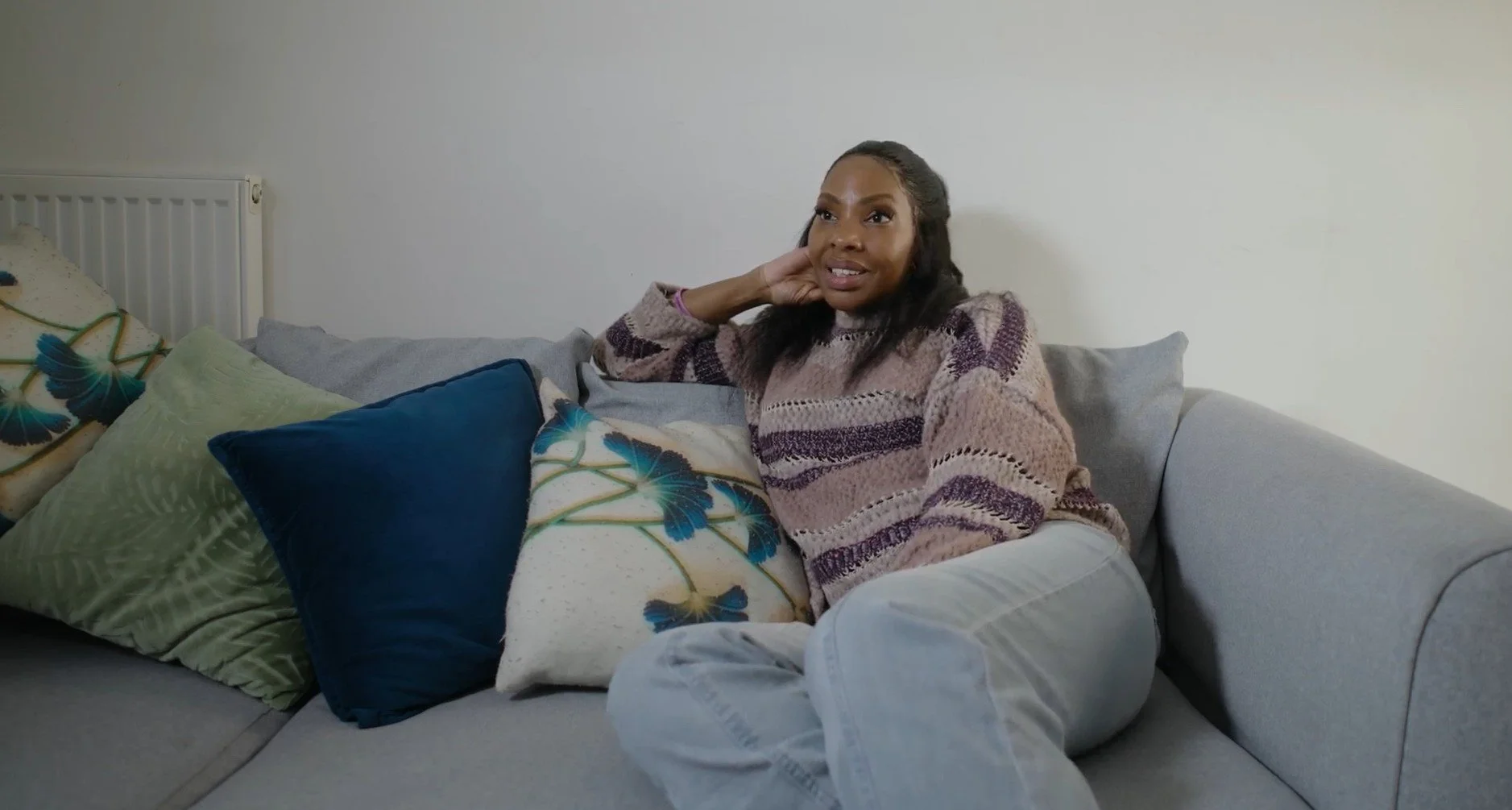
I’m Tamara, a mum of two girls and a cat, living in Birmingham
I was diagnosed with triple negative breast cancer when I was 38. Before my diagnosis, I felt like I was at the peak of my performance. I looked after myself and didn’t have a family history of breast cancer. So to be diagnosed with TNBC was a huge shock.
A routine GP appointment that changed everything
I always say I didn’t find TNBC. TNBC found me.
In August 2023, I went to my GP for a normal medical review.
During my appointment, my GP noticed that my right armpit looked more swollen than my left. They did not suspect anything cancer-related at the time, but as I was not due further routine screening for some time, they referred me to the breast clinic to get used to screening.
That referral led to my diagnosis.
Discovering it was triple negative breast cancer
Through the breast clinic referral, I had a biopsy which identified that I had triple negative breast cancer.
When I was first told I had breast cancer, I thought I was quite well informed.
“ It was only until I was told it was triple negative breast cancer that I realised “breast cancer” is really an umbrella term.”
The way breast cancer is often described and spoken about can make it sound quite general, but there are different types and subtypes. I did not know enough about that before it happened to me.
After I was diagnosed, I started reading about triple negative breast cancer and how it is usually treated. From what I read, I began to understand that TNBC had fewer treatment options compared with some other types of breast cancer. I started to get an inkling of what might happen before it was even fully discussed with me.
I remember thinking that, to minimise any future risk, I wanted them to take away anything that was worth taking away. If something needed to be done to give me the best chance, I wanted to do it.
When I first began to digest the information, I said to myself: “At least I’ve got something I can fight.” Regardless of whether I won or lost, I felt like I could still put up a fight.
Finding out I had the BRCA2 gene mutation
A few months after my diagnosis, just before my first round of treatment, I was asked if I wanted to have genetic blood testing. I said yes straight away, because I am a mum of two girls.
The results showed that I had the BRCA2 gene mutation. That was a lot to get my head around.
I am the first person in my maternal family line to have breast cancer and the first person to have the gene identified.
Finding out about BRCA2 was not just about me. It also made me think about the potential impact on my children, and even my grandchildren one day.
Learning I had the BRCA2 gene has shown me the power of insight. We now know BRCA2 is in our family, which means we can be monitored. The rest of the world does not always know what is going on in their bodies until something happens, but we have information that can help us.
Telling my children
One of the hardest parts about this journey was telling my children I had cancer.
My mum has never had cancer, so I can’t know exactly how my kids feel about me having cancer, but I know it has been a lot for them.
I hope that, as they grow, they will understand that knowing about BRCA2 can also give them power. It gives them insight. It means they can be monitored, and they can be at the front line when it comes to new research, treatment and developments that may help them in the future.
Going through treatment
My treatment started with chemotherapy. I was told I would have eight rounds of chemo. I had four rounds of one set of medication, and then the second part moved on to stronger medication.
I also had immunotherapy, which started around the same time as chemo.
I had a double mastectomy in April 2024. I had direct-to-implant surgery, so I was able to go to sleep and wake up with new breasts.
I feel fortunate that this was possible for me, because I know many women go through several stages of surgery, including lumpectomies, mastectomies and different types of reconstruction. I also feel that it minimised some of the trauma that I know a lot of women experience.
But that does not mean it was easy. The week before surgery was very heavy. You are trying to digest everything, plan for what is coming and prepare yourself for something huge. It is traumatic.
After my mastectomy, I had finished chemotherapy and was told I was NED, which means no evidence of disease. But I continued immunotherapy until the following December.
Navigating the impact of menopause and previous health issues
I had already been through a lot medically before cancer. When I was 32, I had a hysterectomy because of fibroids.
Being told I needed a hysterectomy traumatised me heavily. I still felt like a spring chicken then, and in some ways still like a kid. It felt final. I knew I was not going to get a new womb and I knew I was not going to be a mum again.
Sometimes, that still gripes me more than having cancer. With cancer, at least I felt like there was something I could fight. With my hysterectomy, it felt like something had been taken and there was no fight I could put up against that.
I then had to navigate menopause. Before I was diagnosed with TNBC, I had been waiting for around nine months for HRT. When I finally started, I felt amazing. Then, on the day I was diagnosed with TNBC, I was told I had to stop my HRT. From there, I had a complete breakdown. I was already in menopause because of my hysterectomy, and then cancer treatment triggered it all over again.
Finding support
When I was first given information by the hospital, I received a pack with different websites and organisations listed, including Black Women Rising. I found them on social media and started following them. I’m now an ambassador for them.
I started attending some of their groups online and found them really beneficial.
I do not think there was enough support around what to expect before surgery, what it feels like afterwards, and what it means emotionally to lose parts of your body. Sometimes, the only support you find is in support groups with other people who have had the same thing.
At first, I was a bit traumatised to realise there were so many women under 40 with cancer. Black Women Rising is not only about breast cancer; it is about all cancers. Through that community, I learnt more about rarer cancers and different experiences that people are living with every day.
“There is something about being part of the same club that no one wants a membership to. There is warmth and safety in that club. There is community.”
And there is something important about finding people like you, as well as finding allies who are going through similar symptoms or a similar journey.
Sharing my story online
I have made new friends because they have seen things I have posted on social media and reached out to me.
At first, I was not necessarily sharing for strangers. I was sharing for people who knew me to see what was happening.
But I have realised that sharing can reach people in ways you do not expect.
A woman recently messaged me on Facebook. She told me she had been watching my posts, downloaded Know Your Lemons, checked herself and felt something. She messaged to thank me because she was going to get checked.
What I really want is for people to be aware. Awareness may prevent cancer for someone else. If it ever happens to them, I hope they can think, “There is information. There are people in the world who have found ways to manage this awful disease.”
Life after TNBC
I am now cancer free, but I am still in cancer treatment because I am waiting for surgery that is part of my cancer treatment. In terms of the actual TNBC, it’s gone and I am classed as NED - no evidence of disease.
My oncologist has explained to me that remission is usually after five years, not necessarily at the point when they tell you the cancer has gone. Because I am still under surveillance, still having check-ups and blood tests, and still navigating treatment and recovery, I would not say I am “post-cancer”.
The new version of ‘normal me’ is a completely different person.
We live in such a visual world. I can look really well. I can speak eloquently. But that does not mean I am not having an emotional breakdown inside, or that my body is not aching terribly.
I now have Addison’s disease from the TNBC, and that is something I am still navigating.
A lot of my recovery has been about trying to get people to understand that I am still recovering, managing chronic fatigue syndrome, chemotherapy-induced fatigue and Addison’s-related fatigue.
“Cancer has changed how I look at life. It has made me feel like there is an hourglass above my head.”
It reminds me to focus on what I do with the sand in my hourglass. What I choose to entertain. The groups I put myself in. My employment. Everything about me.
I have been through something that has made me feel like the sand in my hourglass could be limited. So I have to do well with the grains of sand I have.
Finding strength through TNBC advocacy
My charity work and ambassadorship
I am an ambassador for We Get Touchy Feely, which is really close to my heart. A good friend of mine created the charity, and it highlights so many important things. It has been amazing to be part of it.
I am also now ambassadoring for The UK Charity for TNBC. That feels exciting because I feel like I am part of a movement. I feel like we are really being heard now. Voices are being amplified, and it makes me feel strong to be involved.
In a way, that is how I measure my health at the moment. If I do not feel strong, mentally or physically, I will not be able to be involved in these things. So they keep me going, just as much as I still access the support I need from them for my own recovery.
Getting involved in research discussions
I work with an Oxford PPI group, which has been amazing. Last year, I had the opportunity to go down to the university and work alongside them, discussing things that could be part of the future, including cancer vaccines and other developments.
I also do some work with the DAC at King’s College London where I attend monthly research meetings.
Having the BRCA2 gene and a TNBC diagnosis has given me more drive to find out what is happening behind the scenes. I do not only want to be involved in front-facing ambassador work, I also want to know about the research. Research impacts my future life expectancy. It impacts my children and my family. I want to understand as much as I can.
My advice for someone newly diagnosed
It is good to understand the wider information about TNBC, but try not to let general statistics become your personal future. You are your own body, your own bloodwork, your own treatment response and your own situation.
When I was diagnosed, I came home with all the leaflets and wanted to understand everything. One of the first things I saw online was frightening information about recurrence, and I remember thinking, “Oh God, there’s no point.”
That is one of the hardest things about TNBC. You can read things online that make you feel like there is no hope. One thing I love about my oncologist is how she supported me through that. When I became worried about my bloods or obsessed with things I had read on the internet, she reminded me that credible, evidence-based research is important, but when it comes to TNBC statistics and me, I am my bloods and I am my own stats.
Try to find people who understand. For me, community is one of the best things you can have if cancer ever darkens your door.
Community can be warm, safe and help you feel less alone. But it has to be community without comparison. That is easier said than done. It can be hard to be in groups and not compare yourself to other people.
But remember: Everyone’s trauma is different. Everyone’s treatment is different. Everyone’s body is different.
Most of all, remember that if cancer puts your back against the wall, you are allowed to fight in whatever way you can. You do not have to be inspirational. You just have to be human.
The power of insight and community after a TNBC diagnosis
Tamara’s story is one person’s experience of triple negative breast cancer, but many people may recognise parts of what she shares: the shock of being diagnosed, the complexity and emotional impact of treatment, surgery and recovery, and the importance of finding community without comparison.
By sharing her story, Tamara hopes to help others understand the power of insight: understanding your own body, using information to feel more informed for yourself and your family, and feeling empowered to use your voice and experience to help create change.
If you have been diagnosed with TNBC, or you are supporting someone who has, The UK Charity for TNBC has information and resources to help you feel more informed and less alone. You can also connect with others through the charity’s online forum, explore other TNBC support resources, or join the Patient Advisory Panel to help drive change in TNBC awareness, treatment and care.